

What Is the Public Access Test?
The public access test is a structured evaluation that measures whether a dog can behave safely and calmly in real-world settings. It is used by therapy dog organizations to confirm that a dog and handler team are ready to enter hospitals, schools, libraries and care facilities.
Unlike obedience competitions, this test is not about perfection. It is about reliability. A therapy dog must stay calm when things get unpredictable, because visits always include some level of unpredictability.
Different organizations use slightly different formats. The core evaluation criteria, though, are consistent across most reputable programs. If your dog can meet those shared standards, you are well positioned to pass with almost any certifying body.
Why This Test Matters for Therapy Work
Therapy dog visits take place in environments where people are already vulnerable. A hospital patient recovering from surgery does not need a dog that lunges at the sound of a dropped tray. A child in a school reading program needs a dog that will stay settled even when a classmate runs up with excitement.
The public access test exists to protect those people. It also protects your dog. A dog placed in overwhelming situations before it is ready experiences real stress. Passing this test confirms that your dog genuinely enjoys the work and can handle it without anxiety.
At TheraPetic® Healthcare Provider Group, a 501(c)(3) nonprofit, our mission is to connect communities with well-prepared therapy animal teams. We see firsthand how proper evaluation protects both the people being served and the animals doing the serving.
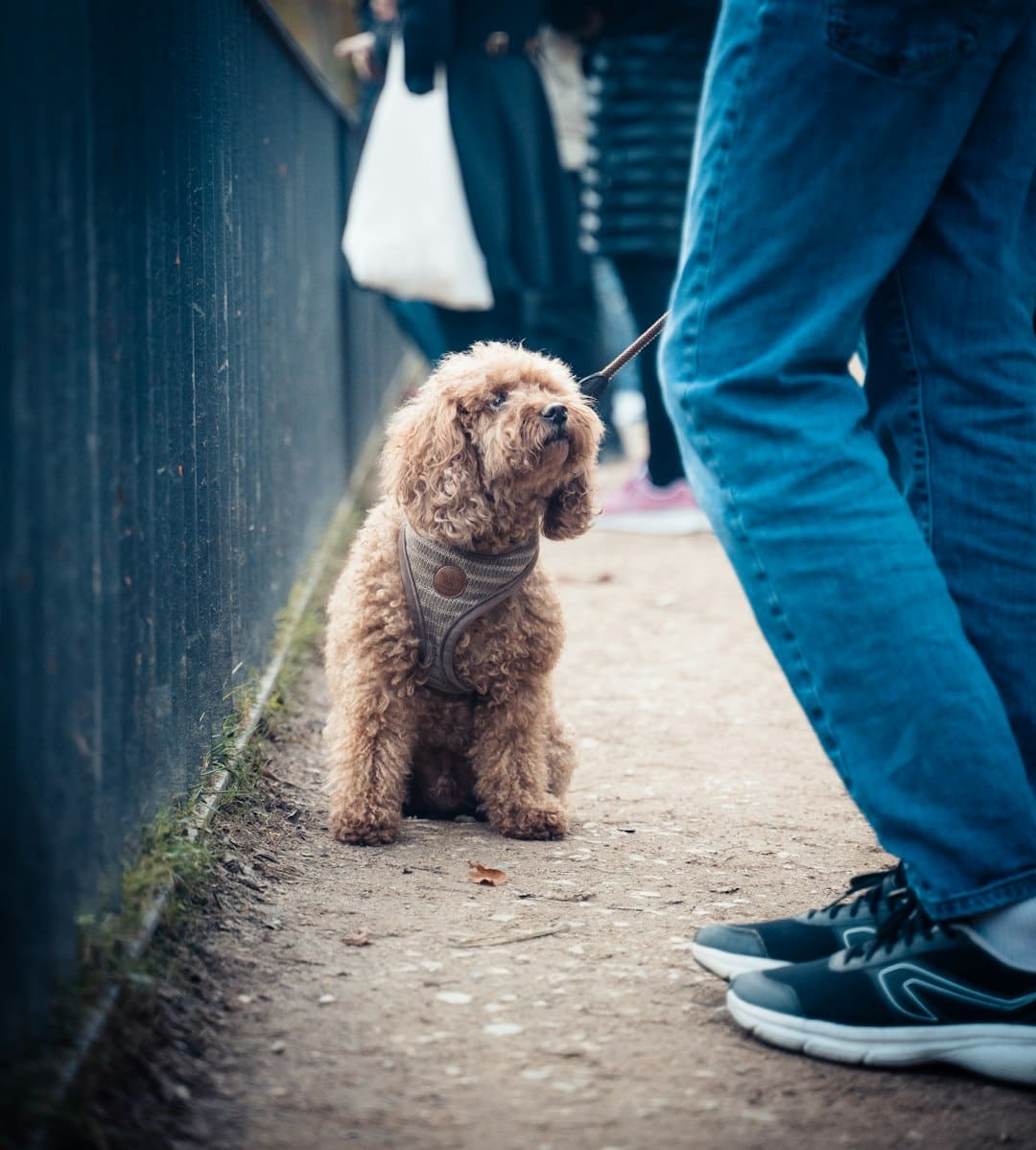
Core Skills Every Dog Is Evaluated On
Across most therapy dog evaluations, the following skill areas appear consistently. Think of these as the foundation your dog must have before focusing on advanced distraction work.
Basic Obedience Under Distraction
Your dog must respond reliably to sit, down, stay and come. Not in your quiet backyard. In a busy hallway with other people walking by. The evaluator needs to see that your commands work even when the environment is competing for your dog's attention.
A loose leash walk is also required. Your dog should not pull toward interesting smells, people or other animals. Pulling in a care facility can knock equipment over or unbalance an elderly person using a walker.
Accepting Strangers and Handling
Therapy dogs are touched constantly. Patients who may have limited mobility will reach from awkward angles. Children may approach quickly. Your dog must accept being petted by multiple strangers without jumping, growling or pulling away.
The evaluator will typically have a stranger approach, pet the dog and handle its ears, paws and back. A dog that tolerates this from you but stiffens with strangers is not ready for facility visits.
Controlled Greeting
Jumping is one of the most common failure points. An excited dog jumping on a patient with fragile skin or a recent incision causes real harm. Your dog must greet people with all four paws on the floor, every single time.
This skill requires consistent practice over months, not days. Every person in your household must reinforce the same rule so your dog does not learn that jumping sometimes works.
How Dogs Are Tested on Real-World Distractions
This section of the public access test is where many dogs need the most preparation. Evaluators deliberately expose your dog to the kinds of things it will encounter on actual visits.
Wheelchairs and Mobility Aids
A wheelchair rolling toward your dog looks and sounds different from a person walking. The metal frame, the wheels, the slight mechanical noise and the height difference of the seated person can all trigger a stress response in an unprepared dog.
Evaluators will roll a wheelchair or walker directly toward your dog. Some will also approach from the side. Your dog needs to remain calm and may be asked to walk alongside the mobility aid without flinching or pulling away.
Crutches present a similar challenge. They move in an irregular pattern and make a clicking sound on hard floors. Practice exposure to these tools at home well before your test date.
Sudden Noises
Hospitals and schools are loud places. Intercoms crackle. Doors slam. Medical equipment beeps. A dropped clipboard can echo in a quiet hallway. Your dog will be tested on its reaction to sudden, unexpected sounds.
The evaluator might drop a book or metal object near your dog during the test. A dog that startles slightly and then recovers is fine. A dog that bolts, barks repeatedly or cannot refocus on you after a surprise is not ready.
Recovery speed matters more than the initial flinch. Help your dog build resilience by exposing it to surprising sounds gradually during your preparation period.
Crowds and Tight Spaces
Therapy dogs regularly move through crowded waiting rooms and narrow corridors. Your dog must remain composed when people pass closely, brush against it or stop to watch. Being comfortable in open parks is very different from being comfortable when strangers are within arm's reach on all sides.
Take your dog to busy public spaces regularly. Farmer's markets, hardware stores that allow dogs and outdoor events all provide excellent socialization experiences that translate directly to better test performance.
Other Dogs
Some facilities have multiple therapy dog teams visiting at the same time. Your dog may encounter another dog in a waiting area or during a group visit. The test will typically involve passing another dog at close range.
Your dog does not need to be indifferent to other dogs. It needs to stay under your control, not lunge or bark, and be able to refocus on you when asked. That level of self-regulation is what the evaluator is looking for.

The Handler Is Evaluated Too
New handlers are sometimes surprised to learn that the public access test evaluates them just as much as their dog. Your body language, commands and situational awareness are all part of the assessment.
Evaluators watch for handlers who give too many commands, repeat commands without follow-through or visibly panic when their dog reacts. Staying calm when your dog gets distracted communicates leadership. Dogs read human energy constantly. If you tighten up, your dog feels it.
You should also demonstrate that you understand the safety responsibilities of a therapy dog handler. This includes knowing when to redirect your dog away from an interaction, how to position yourself between your dog and a fragile patient, and how to exit a situation professionally if your dog is having a difficult moment.
Volunteering as a therapy dog handler is a real commitment to your community. The handler evaluation piece of the public access test reflects the seriousness of that role.
How to Prepare Your Dog for the Public Access Test
Preparation for the public access test should begin months before you schedule your evaluation. Cramming obedience training in the final weeks rarely works because generalization takes time. Your dog needs to practice skills in many different places and with many different people before those skills become truly reliable.
Build a Desensitization Schedule
Create a simple weekly plan that exposes your dog to one new environment or distraction each week. Keep sessions short, positive and below your dog's stress threshold. The goal is to build confidence, not to push through fear.
Start with lower-stimulation places like a quiet parking lot. Work up to busier environments like outdoor shopping areas. Each positive experience teaches your dog that new places are safe and that you are a reliable guide through them.
Practice With Real Equipment
Borrow or rent a wheelchair. Walk with crutches around your dog. Use a walker or a cane. If your dog has never seen these items before the test, you are setting both of you up for a harder experience than necessary.
Ask friends to help you simulate the stranger-approach portions of the test. Have them walk toward your dog from different directions, make sudden movements and reach down to pet from overhead angles. Variety builds flexibility.
Take a Therapy Dog Preparation Class
Structured classes designed for therapy dog candidates are the most efficient way to prepare. They expose your dog to controlled distractions and give you feedback on your handling technique before the actual test. Our therapy dog screening process includes guidance on what steps to take before and after evaluation so you can move through the process with confidence.
Work on Impulse Control Daily
Leave it, wait and stay under distraction are daily practice skills, not one-time lessons. Spend five to ten minutes every day reinforcing calm behavior. Use real-world moments like meal prep, door greetings and leash walks as training opportunities.
Impulse control is the skill that prevents your dog from rushing a patient, snatching food from a bedside table or reacting to another dog in a hallway. It cannot be overtrained.
What Happens on Test Day
Most public access evaluations take between 30 and 60 minutes. The evaluator will walk you through a series of tasks and scenarios either in a designated test facility or in an actual community setting like a school or library.
Arrive early so your dog has time to sniff the environment and settle. Bring your dog's regular leash and collar or harness. Avoid feeding a large meal right before the test. Keep pre-test exercise moderate so your dog is calm but not exhausted.
If your dog fails one element, most organizations allow a retest after additional preparation time. A failed test is feedback, not a final verdict. Many successful therapy dog teams needed more than one attempt before they were fully ready.
For a detailed breakdown of how evaluation criteria connect to your volunteer registration, visit the therapy dog certification overview on our site. It walks through what documentation you will need and what comes after you pass.
After You Pass: Keeping Skills Sharp
Passing the public access test is the beginning of your therapy work, not the finish line. Skills decay without regular reinforcement. Dogs that visit facilities only occasionally sometimes regress in their distraction tolerance because they are not being regularly challenged.
Make short training sessions part of your regular routine even after you are certified. Practice loose leash walking in new places. Continue exposing your dog to crowds, mobility equipment and noise. Review your own handling habits periodically.
Many experienced therapy dog handlers find that joining a local team or visiting program helps them stay consistent. Group visits provide natural ongoing training through real experience. The community aspect of therapy dog work also keeps handlers motivated and connected to the purpose behind the training.
The American Kennel Club Canine Good Citizen program is a well-established benchmark many therapy dog organizations reference when setting evaluation standards. Earning that credential before pursuing therapy dog certification is a strong preparation strategy for most teams.
Your dog's ability to bring calm and comfort to people in difficult moments is a genuine gift to your community. The preparation is demanding because the work is meaningful. When your dog settles beside a child who struggles to read out loud, or rests its head on the hand of someone who has not smiled in days, you will understand exactly why the standard exists.
Ready to take the next step? Reach out to our team at TheraPetic® Healthcare Provider Group at help@mypsd.org or call (800) 851-4390. We are here to support every handler and every dog on the path to meaningful volunteer service.
Written By
Ryan Gaughan, BA, CSDT #6202 — Executive Director
TheraPetic®® Healthcare Provider Group • About • LinkedIn • ryanjgaughan.com
Clinically Reviewed By
Dr. Patrick Fisher, PhD, NCC, BC-TMH, C-AAIS — Founder & Clinical Director • The Service Animal Expert™
Editorial Review
This article was reviewed by Dr. Patrick Fisher, PhD, NCC, BC-TMH, C-AAIS on April 30, 2026 for accuracy, currency, and clarity. Content is updated when laws or guidance change.